For most funeral home owners, the business is far more than a livelihood. It is a name above the door, a family story, and an identity built over generations. Years of serving families during their most difficult moments create deep personal and community connections that cannot be measured on a balance sheet. The funeral home often represents decades of hard work, sacrifice, and dedication passed down from one generation to the next.
Because of this, selling family funeral home is rarely a simple business transaction. It involves balancing financial considerations with emotional attachments, family expectations, and concerns about preserving a legacy. Many owners find themselves reflecting not only on the value of the business but also on what it has meant to their family and community over the years.
We understand that selling family funeral home is not a purely financial decision. I have seen firsthand how the emotional weight of letting go can stall a sale, delay important decisions, or cloud good judgement. Owners often worry about what will happen to their staff, their reputation, and the families they have served for decades. This guide speaks honestly to that side of the journey, helping you navigate both the practical and emotional aspects of the transition with confidence and clarity.
Why This Sale Feels So Personal
Why This Sale Feels So Personal
A funeral home is rarely just a business. It often carries a parent’s legacy, a family surname, and decades of serving the same community through their hardest moments.
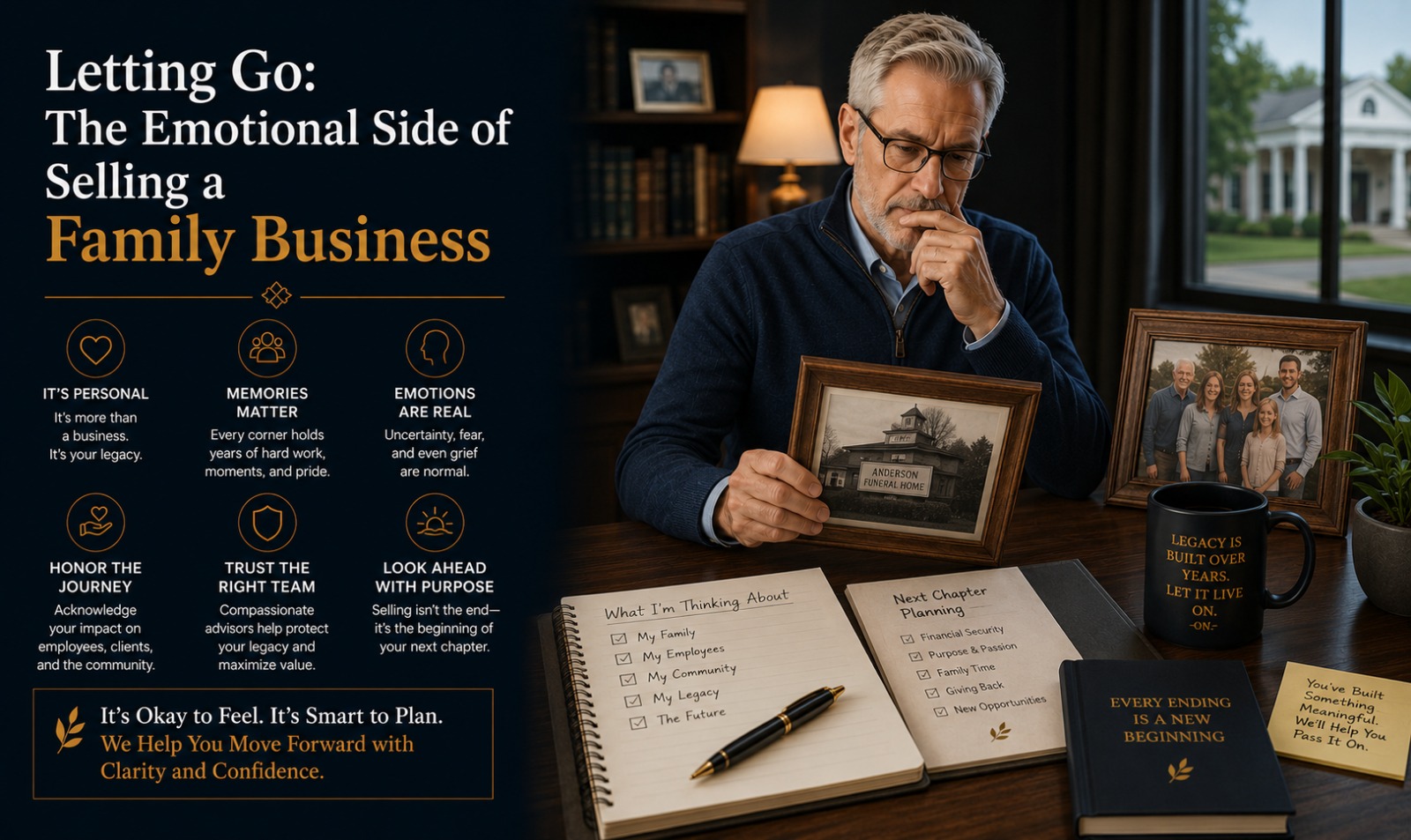
That history makes selling family funeral home assets and operations feel less like a transaction and more like closing a chapter of your own life. For many owners, the building itself holds memories: the office a father worked from, the chapel a grandmother designed, and the staff who feel like extended family. Acknowledging this openly is not weakness; it is the first step toward a clear-headed decision. Owners who name the emotion early make far better choices than those who suppress it.
The emotional side of selling family funeral home businesses is often underestimated. While financial planning and valuation are important, the personal attachment to the business can have an even greater influence on the decision-making process.
Recognising the feeling is one thing; keeping it from steering the decision is another.
The Identity Question Owners Rarely Talk About
There is a quieter struggle beneath the sale, and it is rarely spoken aloud. For decades, your role has defined who you are in the community, and stepping away can feel like losing part of yourself.
Many owners hesitate not because of money, but because they cannot picture life without the title, the routine, and the purpose the business gave them. This is normal, and it deserves real reflection rather than avoidance. We encourage owners to think about what the next chapter looks like before the sale, not after, because a clear vision of what comes next makes letting go feel like a beginning rather than an ending.
For many owners, selling family funeral home operations means redefining their identity after years of leadership and service. Thinking through that transition before the sale can make the process significantly easier and less stressful.
Once you face the identity question, the practical risks of emotion become easier to manage.
When Emotion Quietly Costs You
Emotion does not just make selling hard; it can directly affect the outcome. When feelings drive the timeline, owners tend to make two costly errors.
The most common emotional missteps we see are the following:
- Holding on too long — waiting out of guilt until health, energy, or the market declines
- Selling too suddenly — reacting to a life event and accepting the first offer that appears
- Refusing to delegate — staying so personally involved that the business never proves it can run without you, which lowers its value to buyers
Each of these erodes value. I always advise owners to separate the emotional decision from the financial one, so the head guides the timing while the heart is given space to grieve the change. A clear plan protects you from deciding in a difficult moment, and it keeps a single emotional reaction from undoing years of careful work.
Protecting the decision is important, but so is protecting the people tied to it.
Protecting the Legacy You’re Leaving
Much of the emotional difficulty comes from worrying what happens after you sell. Will the name be respected? Will the staff be cared for? Will the community still be served well?
These concerns are valid, and they are also manageable. Choosing the right buyer and structuring the transition thoughtfully lets you protect your reputation, your team, and the standard of care that carries your name. We prioritise matching owners with successors who respect the legacy, because for most sellers that matters as much as the price. Our exit and succession planning guide covers how to build that kind of transition deliberately.
When the legacy is protected, the emotional path to letting go becomes far easier.
Bringing Family Into the Conversation
If your business is generational, the emotion is not yours alone. Children, siblings, or a spouse may have their own feelings about selling, even if none of them want to run the home themselves.
Unspoken assumptions cause real friction here. One family member may expect to inherit it, while another quietly wants the sale, and the gap surfaces at the worst possible time. I always advise owners to have honest conversations early, so everyone understands the plan and the reasoning behind it. Clear communication prevents resentment and keeps the sale from becoming a source of family conflict.
With the family aligned and the legacy secured, the final step is internal.
Giving Yourself Permission to Move On
Letting go does not mean abandoning what you built. It means trusting that your work can continue in capable hands while you step into the next stage of your life.
Many owners feel relief, not regret, once the transition is handled with care and respect. The legacy does not end when you sell; it continues through the staff you trained, the families you served, and the standard you set. Selling well honours that legacy rather than ending it. If you want a confidential, understanding conversation about your situation, our team is ready to help you take the next step.
Conclusion
Selling a family funeral home is an emotional journey as much as a financial one. Name the feelings, keep them from rushing the timing, bring your family into the conversation, protect your legacy, and give yourself permission to move forward. Handled with care, letting go becomes a fitting close to a meaningful chapter. We are here to walk that path with you.
Why Choose Us
We focus exclusively on funeral home owners, and our founder Matt brings firsthand understanding of this profession to every sale we guide.
- Deep specialization in funeral home sales, not general business brokerage
- Genuine sensitivity to the emotional weight of a family legacy
- A confidential process that protects your name and your staff
- Careful buyer matching that respects your standard of care
- A focus on a transition you can feel at peace with
FAQs
1. Why is selling a family funeral home so emotional?
The business often carries a family name, a parent’s legacy, and decades of community service, making the sale feel like closing a personal chapter, not just a deal.
2. How do I keep emotion from hurting the sale?
Separate the emotional decision from the financial one. Let a clear plan guide the timing while you give yourself space to process the change.
3. What are the most common emotional mistakes?
Holding on too long out of guilt, selling suddenly after a life event, or refusing to delegate. Each tends to lower the final value.
4. How do I handle family disagreements about selling?
Talk early and openly. Surfacing everyone’s expectations before the sale prevents resentment and keeps the process from causing family conflict.
5. Will I regret selling?
Many owners feel relief rather than regret once the sale is handled with care, knowing their work continues in capable hands.