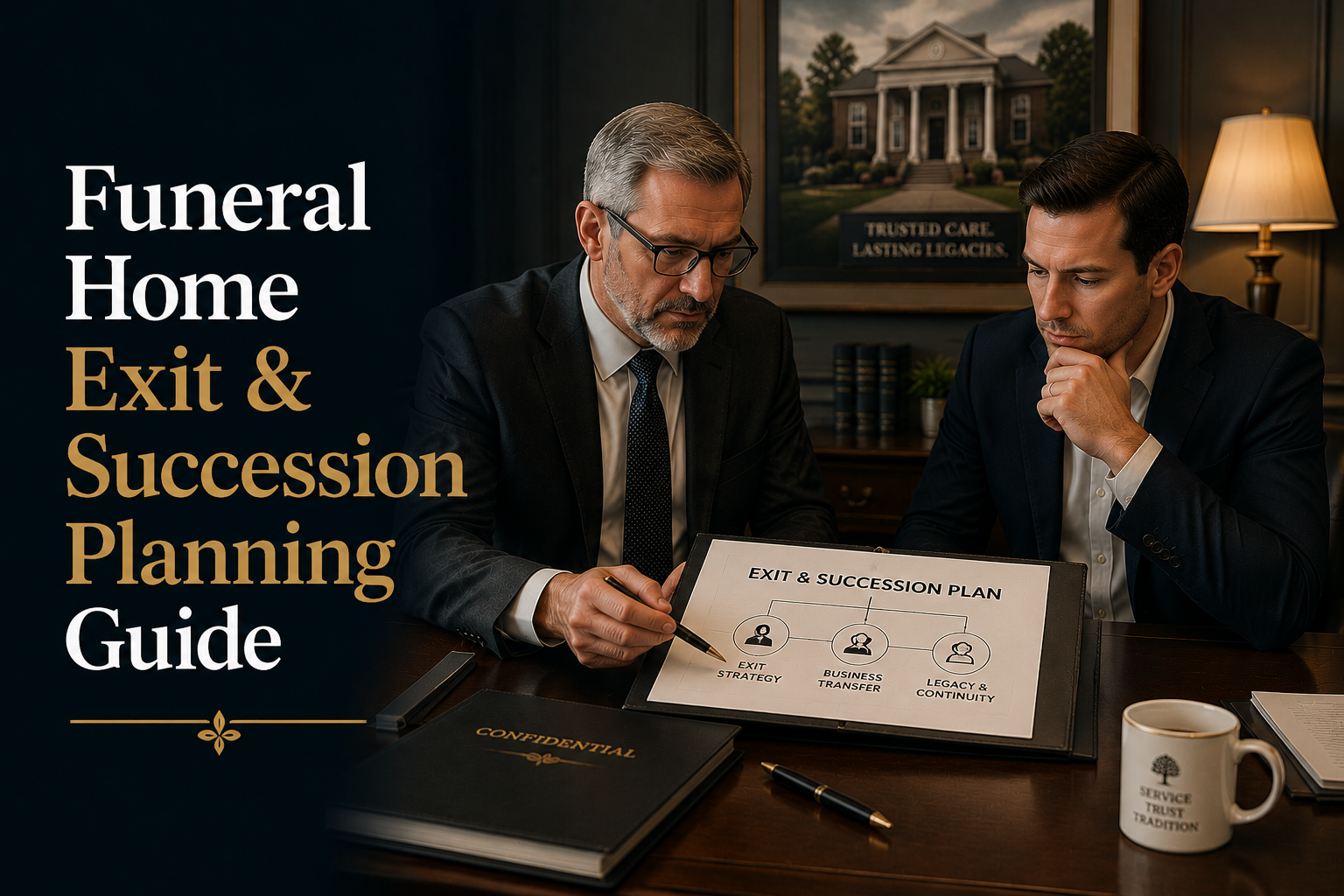
Every funeral home owner will eventually step away. The difference between a smooth transition and a chaotic one comes down to how early and how deliberately you plan for it.
We guide owners through this exact decision, and the earlier it starts, the stronger the outcome. I have seen firsthand how a thoughtful exit plan protects an owner’s legacy, their staff, and their financial future all at once.
Why Exit Planning Cannot Wait
Many owners delay this conversation because the business feels too personal to imagine leaving. That delay is the single biggest threat to a clean exit.
An exit forced by a health event, burnout, or a sudden offer almost always sells for less and stresses everyone involved. When you are reacting instead of planning, you lose leverage at exactly the moment you need it most. A buyer can sense urgency, and urgency rarely commands top value. Planning years ahead gives you control over timing, price, and how your legacy is handed off. The goal is to leave on your terms, not under pressure.
There is also a practical reason to start early: the improvements that raise your value take time to show up in the numbers. Reducing owner dependence, stabilising call volume, and cleaning up financials are not overnight fixes. Owners who begin the conversation three to five years out give themselves room to make these changes count. Once you accept that planning early is the advantage, the first step is knowing what you are working with.
Step 1: Understand Your Value Early
You cannot plan an exit around a number you do not know. A current, defensible valuation is the foundation of every succession decision you will make.
Knowing your worth early lets you set realistic retirement goals and identify what to improve before you sell. It also prevents a painful surprise later, when an owner who assumed a certain figure discovers the market sees the business differently. A valuation grounded in adjusted earnings, call volume, pre-need backlog, and real estate gives you a number you can actually plan around. We walk owners through every driver in our funeral home valuation guide, so your exit plan is built on real figures rather than hope.
An early valuation does more than set expectations; it becomes a roadmap. Once you see which factors are dragging your value down, you have years to address them rather than weeks. With your value understood, the next decision is who takes over.
Step 2: Choose Your Succession Path
Exit planning splits into a few clear paths, and the right one depends on your family, your goals, and your timeline. Each carries different financial and emotional weight.
The most common options owners weigh are the following:
- Family succession — passing the business to a child or relative who wants it
- Internal sale — selling to a trusted manager or key employee
- External sale — selling to an independent operator or qualified outside buyer
- Hybrid transition — gradually transferring ownership over time
Each path comes with trade-offs. Family succession preserves the name but can strain relationships if expectations are unclear. An internal sale rewards loyalty but may limit your price if the employee lacks capital. An external sale often delivers the strongest value but requires careful buyer selection to protect your legacy. I always advise owners to be honest about whether the next generation truly wants the business. Assuming a family member will take over, without confirming it, derails more succession plans than any market factor.
Choosing the right path early also shapes everything that follows, from how you prepare the business to how you finance the transition. Once the path is chosen, the focus shifts to protecting what you have built.
Step 3: Protect Your Staff and Reputation
A succession plan is not only about ownership; it is about the people and the name that carry your business forward. Mishandling this stage can undo decades of goodwill.
Your team and your community reputation are core to the value a buyer or successor inherits. A capable staff that stays through the transition reassures both the buyer and the families you serve, while sudden departures send the opposite signal. A clear plan for staff retention and a confidential transition keeps the business stable and trusted through the change. We prioritise protecting both, because a respected name and a steady team are what make the legacy worth inheriting.
Reputation deserves the same deliberate care. The standard of service that earned your community’s trust is part of what a successor is paying for, so the transition should reinforce that standard rather than disrupt it. With your people protected, the final piece is timing the transition itself.
Step 4: Build a Realistic Transition Timeline
A strong exit is rarely sudden. The best transitions unfold over a planned period that lets ownership, knowledge, and relationships transfer smoothly.
A realistic timeline accounts for preparing financials, improving value, finding the right successor, and handing off operations and community relationships. Rushing any of these stages weakens the result, and skipping the relationship handoff in particular can cost a successor the referral sources that took you decades to build. The right timeline gives the incoming owner enough overlap to learn the business while you are still present to guide them. For owners ready to act, our guide on how to sell a funeral home walks through the full sale process step by step.
A well-structured timeline also protects you financially, since a measured transition avoids the discounts that come with a rushed sale. When each stage has room to breathe, the handoff strengthens the business instead of straining it.
Common Exit Planning Mistakes to Avoid
Even owners with good intentions stumble when the plan is vague or left too late. A few recurring mistakes do the most damage.
The most costly errors we see are assuming a family member will take over without confirming it, waiting until a health event forces a sale, neglecting to document earnings and add-backs, and underestimating how long a proper transition takes. Each one either lowers the final value or creates avoidable stress for everyone involved. The remedy is the same in every case: start early, confirm your assumptions, and build the plan on facts rather than hope. Avoiding these traps is often the difference between an exit you control and one that controls you.
With the common pitfalls in view, the final consideration is how all of this serves your own next chapter.
Planning for Life After the Sale
An exit plan is not only about the business; it is about you. Many owners focus so intently on the transaction that they give little thought to what comes after, and that gap can make letting go far harder than it needs to be.
Thinking ahead about your finances, your time, and your sense of purpose turns the sale into a beginning rather than an ending. Owners who picture their next stage clearly tend to approach the transition with confidence instead of hesitation. We encourage this reflection early, because a well-planned exit should leave you financially secure and personally ready for what follows.
A well-planned exit protects everything you have spent a career building. If you want a confidential conversation about your succession options, our team is ready to help you take the next step.
Conclusion
A funeral home exit deserves the same care you gave to building the business. Start early, know your value, choose the right successor, protect your staff and reputation, and plan a realistic timeline. Owners who plan ahead exit on their own terms, for full value, with their legacy intact. We are here to guide you through every step.
Why Choose Us
We focus exclusively on funeral home owners, and our founder Matt brings firsthand understanding of this profession to every transition we guide.
- Deep specialization in funeral home exits, not general business brokerage
- Early, defensible valuations that anchor your succession plan
- A confidential process that protects your staff and reputation
- Clear guidance on family, internal, and external succession paths
- A focus on preserving your legacy and maximizing your proceeds
FAQ
1. When should I start planning my funeral home exit?
Ideally several years ahead. Early planning gives you control over timing, price, and successor choice and prevents a forced, lower-value sale.
2. What are my succession options?
The main paths are family succession, selling to a key employee, selling to an outside buyer, or a gradual hybrid transfer of ownership over time.
3. What if no one in my family wants the business?
That is common. An internal or external sale lets you exit on your terms while still protecting your staff, reputation, and the value you built.
4. How long does a funeral home transition take?
A smooth transition often unfolds over a planned period, allowing financials, value improvements, and relationships to transfer without rushing.
5. How does valuation fit into exit planning?
A current, defensible valuation is the foundation. It sets realistic retirement goals and reveals what to improve before you transition or sell.